
GRP Access for Desalination & Water Reuse →
GRP Saline Pump & Valve Access
Reach the saline service points.
Specify the complete access system.
GRP saline pump and valve access for desalination plants. Coordinate service routes, chemical exposure, drainage and retained support details with Vital.
Use the saline service layout to prepare a pricing enquiry.
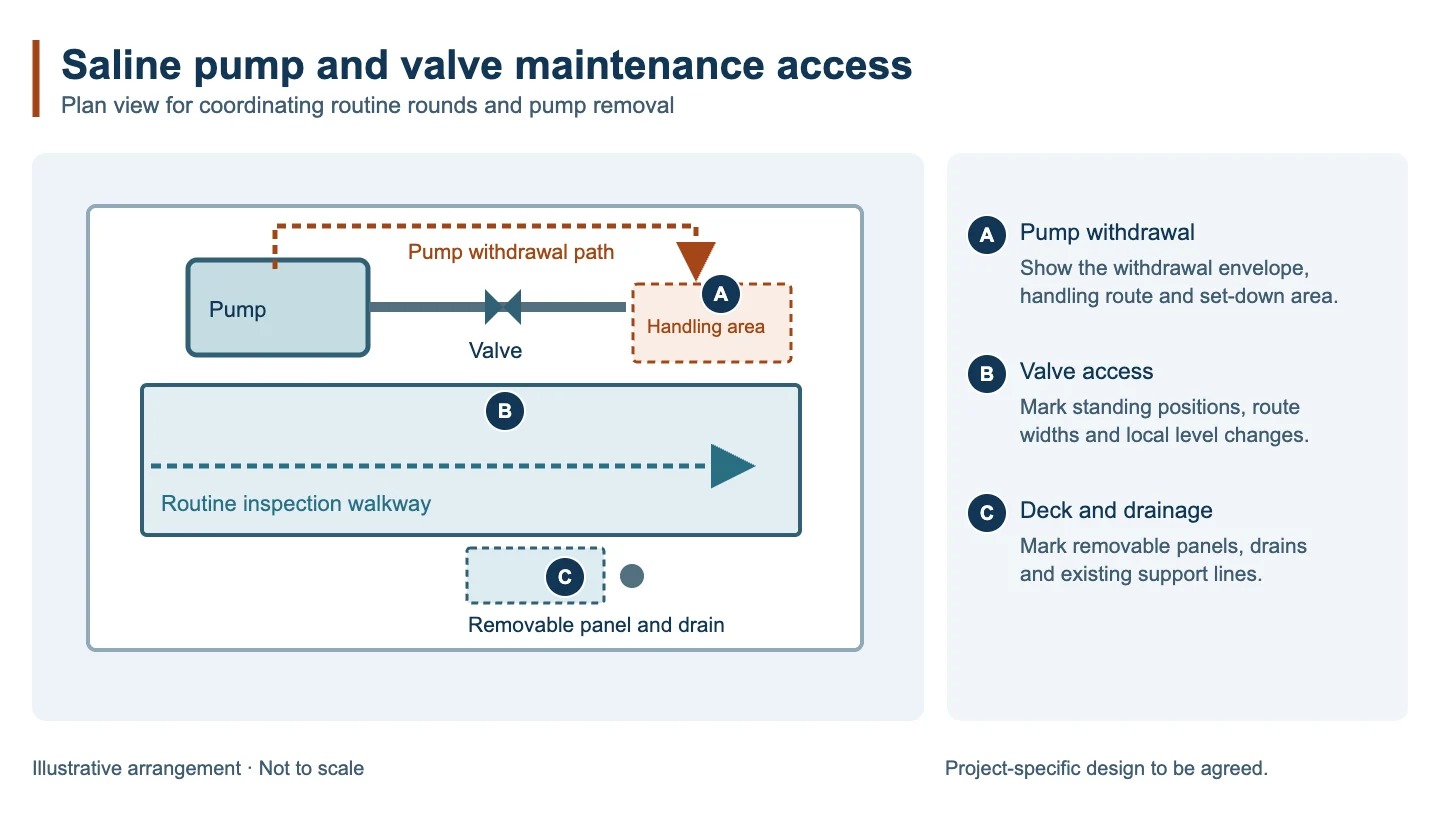
Mark pump withdrawal, valve service positions, drains and removable panels on your current equipment plan. Include the drawing number and revision.

Explore the interactive service area map

Pump service landings
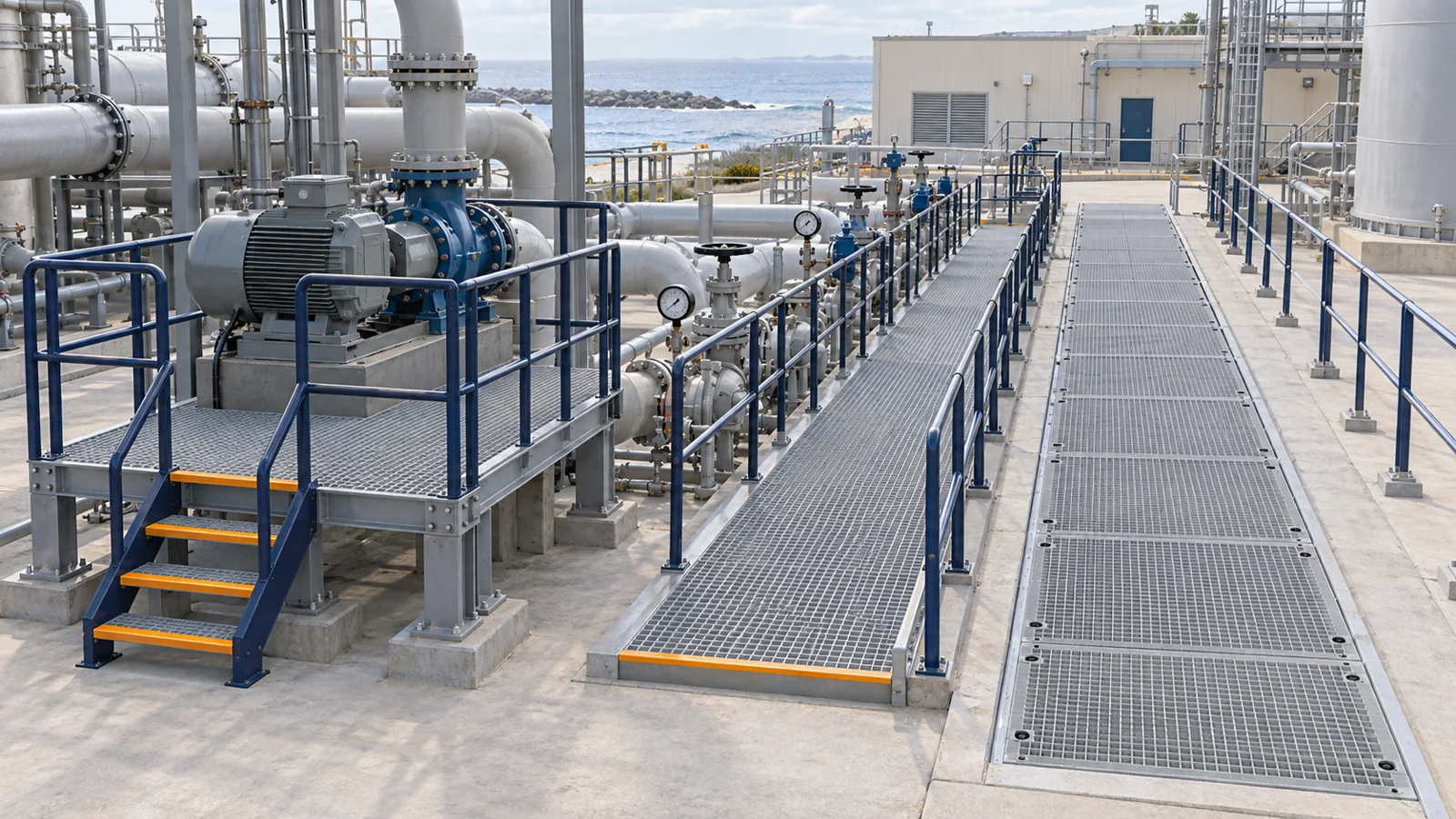
Provide working space beside the maintained equipment. Include open-cover positions, component withdrawal and the planned handling route.
Explore the system →Valve inspection walkways
Connect routine service points with a clear route. Coordinate standing positions, pipework clearances and local changes of level.
Explore the system →Drainage and removable panels
Keep drains and relevant service connections accessible. Detail supported removable sections and the checks needed after reinstatement.
Explore the system →Choose the system around the duty.
GRP grating panels
Compare resin, mesh and surface options against the duty and exposure. Include cut edges, supported openings and removable sections in the schedule.
View the product guidance →Walkways and service platforms
Connect working positions with the approach route, local stairs and guarding. Resolve the supporting arrangement alongside the deck.
View the product guidance →Inspection and maintenance
Retain access to fixings and structural joints. Keep the cleaning and inspection information with the plant’s maintenance records.
View the product guidance →Build the brief around the working task.
Saline service areas combine routine valve and instrument checks with occasional pump or component maintenance. The access package needs to work around pipework, drainage and the condition of the supporting asset, while the material specification reflects the actual exposure. Vital can coordinate GRP walking panels, local service platforms and steps for these areas, with the duty, maintenance task and retained interfaces recorded before fabrication.
Start with the site information
Bring plans, photographs and the equipment supplier’s maintenance clearances. Identify the working position, the route used to reach it and the supporting structure. Vital can help coordinate survey, design information, fabrication and installation around that brief.
Survey and site capture →Resolve the interfaces before fabrication.
Exposure schedule
Distinguish saline spray, intermittent wetting, immersion and cleaning chemicals. Supply concentrations, temperatures and expected contact conditions for review of the selected resin and fixings.
Retained asset condition
Inspect the frame, slab and connections supporting a replacement deck. New grating should not conceal unresolved deterioration or inaccessible structural joints.
Drainage and housekeeping
Coordinate panel edges and supports with drains and cleaning access. Record deposits and contamination that affect the walking surface and the inspection routine.
Specify the complete load path.
Make the loading explicit
Record personnel, tools and pump-maintenance components, including point-load positions and contact areas. Define spans, the required deflection criterion and support reactions. Include environmental actions where relevant and identify whether the equipment is supported independently. Any trolley, lifting device or temporary component storage needs to be specified rather than assumed within routine access duty.
Review the design requirements →Check the support and fixing detail
Confirm the substrate and bearing arrangement before selecting anchors, joints and panel restraint. Review all materials exposed in the assembly, including metallic fixings and retained steel. Coordinate corrosion protection, compatibility and inspection access with the project specification. Where testing is required, agree the method and acceptance criteria with the responsible designer before installation.
Request the supporting information →Plan the installation and the next maintenance visit.
Plan replacement or installation around plant availability and the agreed work area. Identify modules so they can be positioned and checked against the drawing without unnecessary adjustments around operating pipework. Handover should retain the material schedule, permitted loads, restraint details and inspection requirements. Keep a record of the support condition and the assumptions to revisit when equipment or chemical exposure changes.
CAD, structural design and BIM →What should the handover retain?
Keep the agreed drawings, component identification, permitted use, inspection information and maintenance instructions together. Record how future alterations to services, equipment or supports will be reviewed before work starts.
Replacement and refurbishment →Connect the specification with the evidence.
Standards and site requirements
Review the applicable machinery-access requirements, including ISO 14122-2 where relevant. Use the operator’s exposure and materials specification to establish the required product evidence. HSE maintenance guidance provides wider context for planning service access. Any relevant drinking-water contact must be assessed separately with the water supplier.
Define the package boundary
This application is personnel access around saline process equipment. It does not establish suitability for every chemical or immersion condition, hydraulic performance or drinking-water contact. Assess the exact product and complete assembly against the required environment and any additional water-supplier requirements.
Questions to resolve before ordering.
Does GRP mean the whole assembly is corrosion-free?
Review every component and the retained supporting asset. Resin selection, metallic fixings, connections and the actual exposure all matter to the installed arrangement.
Can the existing frame stay when grating is replaced?
Potentially, after its condition, duty, connections and geometry have been assessed. Include the frame in the survey and design review.
What information helps material selection?
Provide the exposure schedule, cleaning chemicals, temperature, contact duration and required product evidence, alongside drawings and load information.
Send the requirement.
Start the engineering review.
Use the requirement builder to record the available dimensions, loads, supports and site constraints. Download or save the brief for your project records, then send it with drawings to Kev or Ashleigh for support.
Send the latest revision with photographs and the scope you need: design, supply, fabrication or installation.
Send your drawings →
Prepare a useful project pack
Include the access area, task, outline geometry, operating conditions and installation window. Mark unknown inputs so they can be resolved in review.
Build and save your access requirement →The brief records requirements; it does not calculate or approve the structure.