
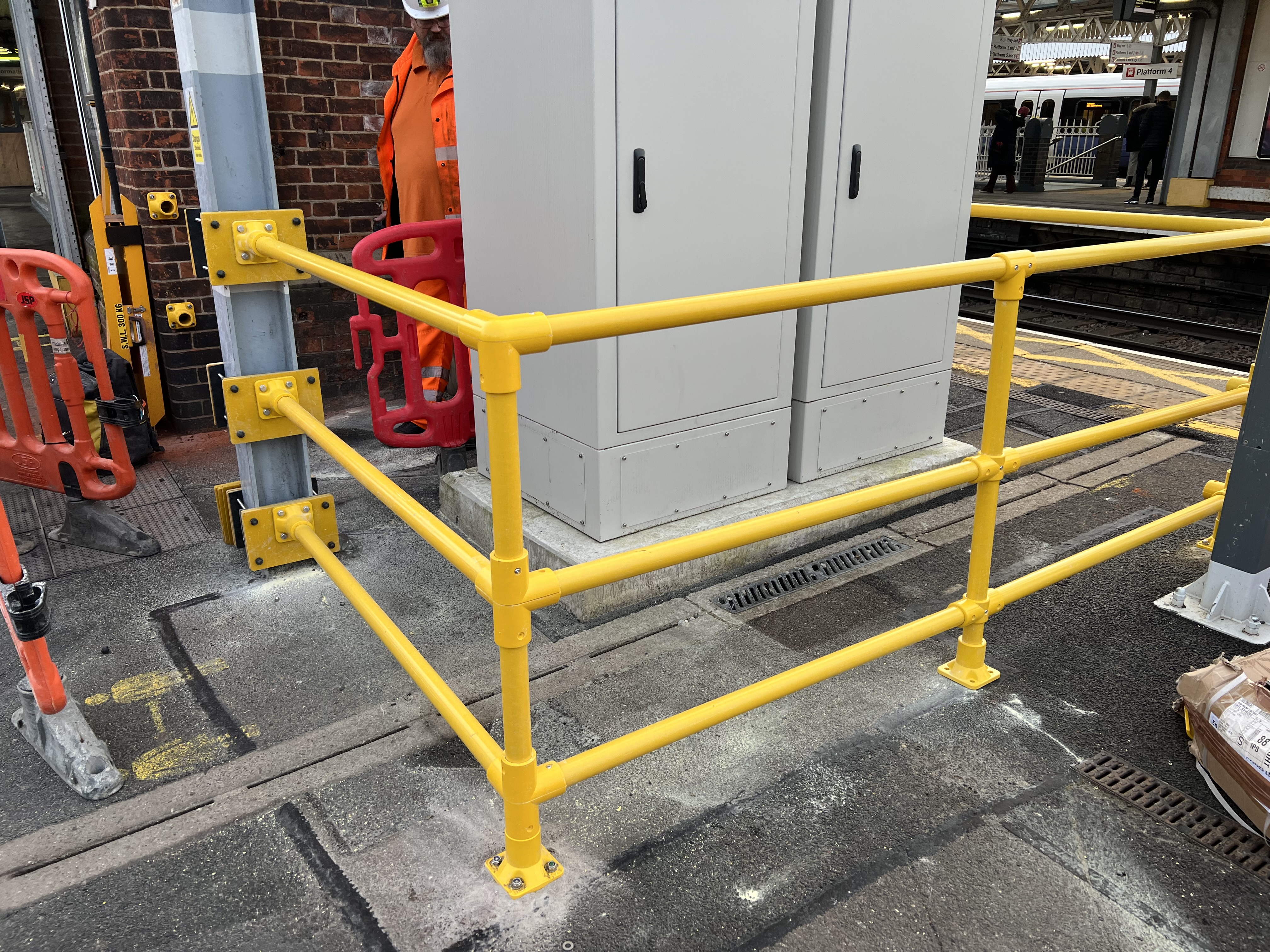
Vital GRP · Engineering insight
GRP around electrified rail
Material choice supports the electrical safety strategy.

TECHNICAL INSIGHT · ELECTRIFIED RAIL · MATERIAL SELECTION
GRP’s non-conductive behaviour can be valuable around electrified railway infrastructure, but it should never be confused with permission to ignore the railway’s electrical-safety system.
Electrical clearances, isolation procedures, earthing and bonding, metallic components, work methods and infrastructure-specific requirements remain part of the project. Material selection can reduce certain hazards; it does not replace electrical engineering.
What electrically non-conductive means in practice
Pultruded GRP is not a metallic conductor in the way that steel or aluminium is. That characteristic can make it attractive for walkways, platforms, handrails and access structures near electrical assets. However, a completed access system can still contain stainless-steel bolts, fixings, hinges, gates or other conductive components.
The system should therefore be assessed as a complete assembly within the electrical environment, not described as universally “electrically safe”.
Clearances remain clearances
Using GRP does not permit a designer to encroach on required electrical or operational clearances. The access route, handrail, user position and tools carried by the user must all be considered against the applicable railway rules and project requirements.
This is particularly important where a walkway alters where people can stand or reach. A route that makes an asset easier to access must not create a new unsafe working position.
Electrical safety and installation methodology
Coordinate access-system design with the project’s electrical-safety arrangements from the outset. Installation near energised assets and isolation-dependent work windows require the responsible railway and electrical disciplines to define the permitted working conditions.
- required isolations and safe-working limits;
- metallic lifting equipment and temporary works;
- conductive fixings and components;
- clearance during erection as well as in the finished condition;
- bonding or earthing requirements specified by the project;
- future inspection and maintenance positions.
Corrosion resistance can matter at the same time
Electrified rail infrastructure is frequently external and may also be exposed to persistent moisture and difficult maintenance access. GRP can therefore combine non-conductive material behaviour with corrosion resistance and relatively low structural weight in the same access package.
The material specification still needs to define mechanical properties, resin system, fire behaviour where relevant, UV exposure and the project environment. “GRP” is not a complete technical specification.

Design the route around human reach
Electrical risk is not limited to the footprint of the platform. The designer should consider the user standing on it, tools or equipment being carried, handrails, gates and any future modifications. Access geometry changes human reach, so it should be reviewed with the responsible electrical discipline.
Use evidence, not slogans
A technical submittal should identify the material system, relevant mechanical and electrical properties, component details and any limitations. It should avoid marketing claims such as “non-conductive therefore no earthing needed” unless that conclusion has been made by the appropriately responsible project designer.
GRP can change the risk profile. It does not cancel the electrical rules.
A disciplined specification
- define the electrical environment;
- define required clearances;
- identify all conductive components in the assembly;
- coordinate user position and reach;
- coordinate installation and isolation methodology;
- specify the GRP material and fire/environmental requirements;
- record the electrical design assumptions in the technical pack.
Designing access near electrified assets?
Vital GRP can develop the structural and access package in coordination with the project’s electrical constraints and responsible designers.
Discuss the requirementTurn your requirement into an engineering brief.
Bring the drawings, site constraints and performance requirements into one review.
Leave a Reply